TractIQ offers the most comprehensive self-storage market data. The below data was last updated March 10th, 2026.
The self-storage industry has over 67,000 active facilities and 3,500 known developments in the United States. According to data from the SSA 2025 Self Storage Demand Study, the percentage of households using self-storage has steadily increased from 8.95% in 2005 to 12.60% in 2024. Professionals and investors see self-storage real estate as an institutional asset class with a proven track record of performance during booms and resistance during busts.
Self-storage is a fast-paced, seasonal business where customers typically sign monthly leases. Due to the monthly nature of the self-storage business, rental rates vary widely at the facility level, let alone within a submarket. Tracking rental rate trends can provide valuable insights when it comes to self-storage supply and demand.
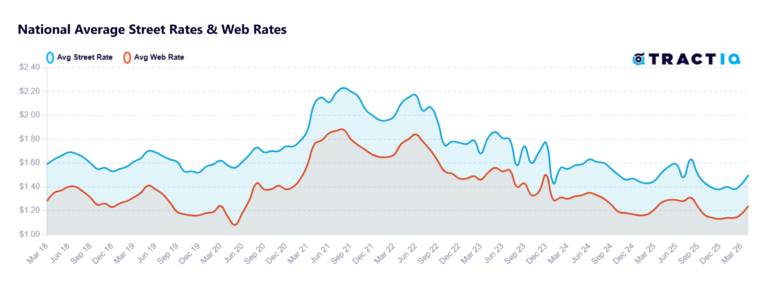
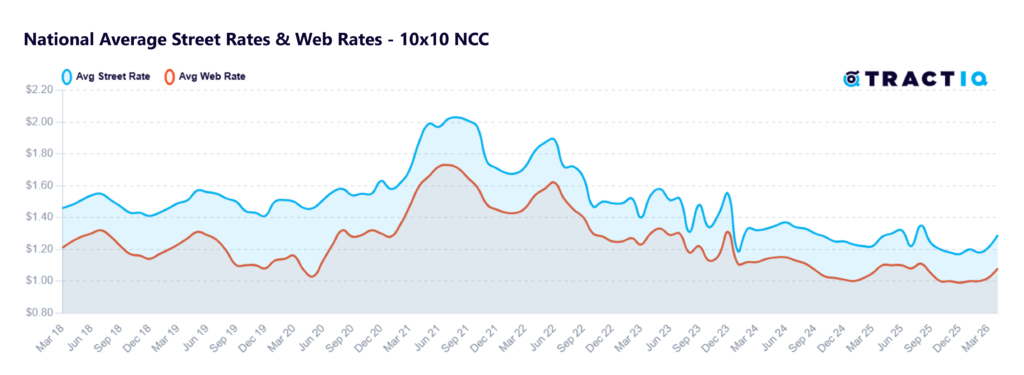
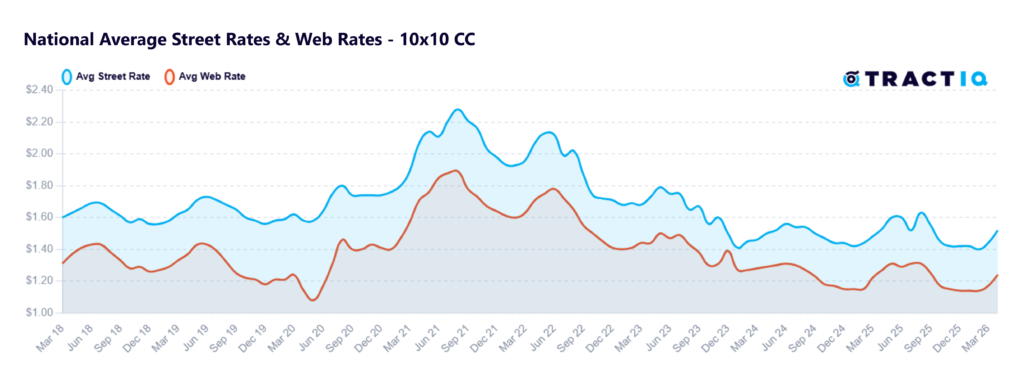
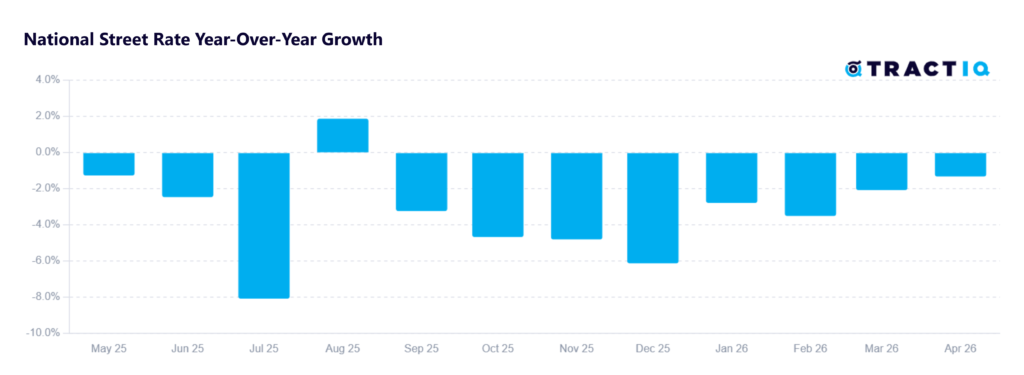
The average monthly street rate per square foot is $1.40 as of March 10th, 2026. This represents a -3.4% year-over-year growth rate. The street rate for a particular unit is the rate that a customer would be charged if they were to walk in off the “street” and rent a unit in person at the facility. Monthly street rates for 10×10 non-climate-controlled and climate-controlled units are $1.20 PSF and $1.40 PSF respectively.
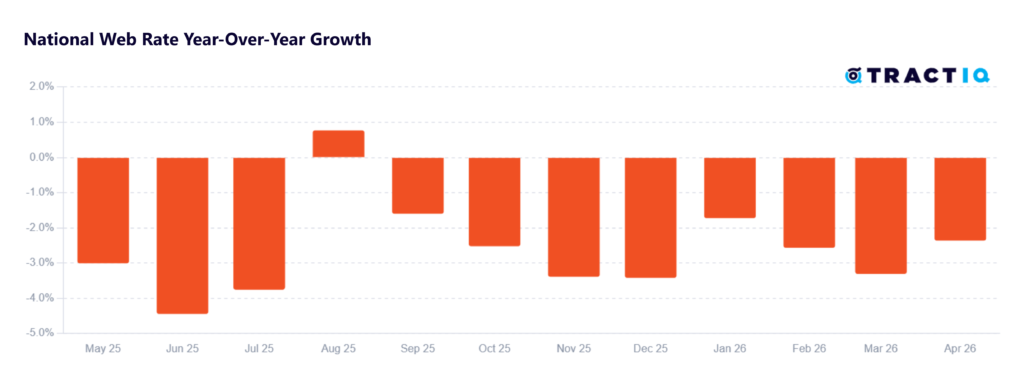
The average monthly web rate per square foot is $1.14 as of March 10th, 2026. This represents a -5.8% year-over-year growth rate. Web rates are rental prices advertised online, often discounted to attract price-sensitive shoppers. These typically include short-term promotional pricing. Monthly web rates for 10×10 non-climate-controlled and climate-controlled units are $0.99 PSF and $1.12 PSF respectively.
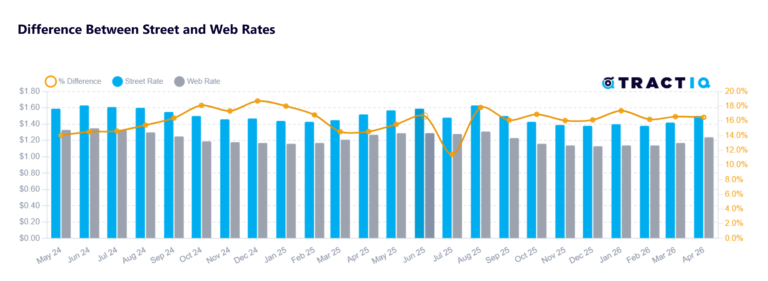
The percent difference between average street rates and web rates can tell us a lot about self-storage demand and the state of the industry. As discounting (yellow line) increases, it suggests that operators are losing pricing power and have to discount rates to attract customers. As of late, discounting has been elevated compared to recent history.
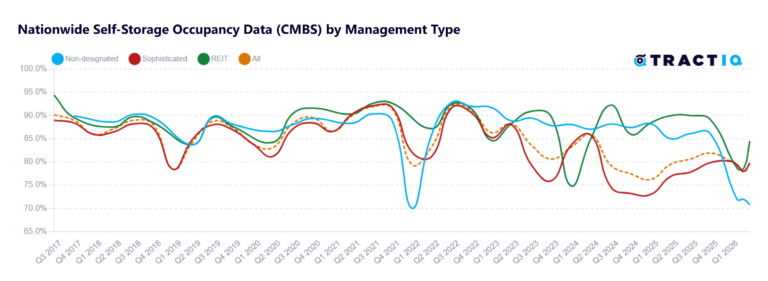
The above chart shows national occupancy figures by management type, according to thousands of CMBS-reporting self-storage facilities. As of Q3 2025, national REIT occupancy was 89.5% and Non-designated operator occupancy was 87.0%. As of January 2026, Sophisticated operator occupancy was 79.3%. From Q3 2024 to Q3 2025, occupancy decreased 1.7 percentage points.
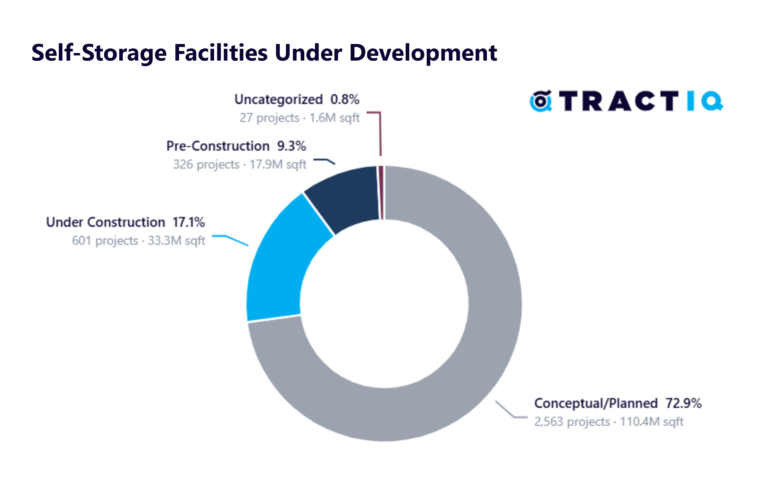
Self-storage square feet under development represents 6.8% of total existing self-storage square feet. About 72.9% of self-storage projects under development are within the conceptual/planned phase. These projects may or may not be built as they are still in the early stages of understanding feasibility and seeking approvals. Understanding supply is essential to succeed in your self-storage business.
As self-storage data experts, we are committed to delivering the most up-to-date market data, industry insights and educational resources. Tell us the MSA’s you’re interested in below and receive monthly market data directly in your inbox.